English
An advanced zirconia ceramic stabilized with magnesium oxide, developed for high-temperature service, thermal shock resistance and demanding industrial environments. Mg-PSZ is particularly suited to metallurgy, steel production, petrochemical equipment and precision mechanical components.

Magnesia Partially Stabilized Zirconia, commonly abbreviated as Mg-PSZ, is an advanced oxide ceramic made by stabilizing zirconia with magnesium oxide. According to the material information provided by VANCERA, zirconia containing approximately 8–12 mol% magnesium stabilizer is classified as magnesia partially stabilized zirconia.
Zirconia ceramics are valued for their high melting point, hardness, low thermal conductivity, low friction and chemical inertness. Mg-PSZ is especially noted for its high-temperature performance and resistance to thermal shock.
With a listed maximum working temperature of 2,000°C, Mg-PSZ is used in demanding industrial environments where components must withstand substantial heat and challenging operating conditions.
Mg-PSZ combines the characteristic properties of zirconia with magnesium stabilization, making it a candidate material for high-temperature equipment and demanding mechanical applications.
Mg-PSZ is designed for elevated-temperature environments. The VANCERA material data lists a maximum working temperature of 2,000°C.
Its reported thermal shock resistance of 250°C makes the material relevant to applications involving significant temperature changes.
With a listed bending strength of 500 MPa and compressive strength of 2,500 MPa, Mg-PSZ can support demanding mechanical service conditions.
A Vickers hardness value of 1,200 HV 0.5 indicates a hard ceramic surface for applications where resistance to surface damage is important.
The listed thermal conductivity is below 2 W/mK, a characteristic relevant to thermal management and high-temperature component design.
Zirconia ceramics are known for their high melting point, low friction, chemical inertness and useful electrical properties. Actual performance depends on operating conditions and component design.
Magnesia content is an important part of Mg-PSZ material identification. The referenced VANCERA page specifies a magnesium stabilization range of 8–12 mol%.
MgO is used as a stabilizing component in zirconia. The source identifies compositions containing 8–12 mol% magnesium stabilizer as Mg-PSZ.
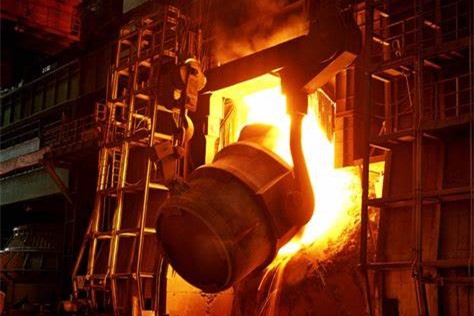
The material is intended for demanding thermal environments, including applications in metallurgy, steel production and petrochemical industries.
Mg-PSZ is also listed for mechanical sealing rings and standard measuring tools, where strength, hardness and dimensional requirements matter.
Mg-PSZ is used in a range of high-temperature and precision industrial components. Component selection should take account of the working temperature, mechanical loading and service environment.
Zirconia plunger and piston components are among the applications identified on the VANCERA zirconia materials page. Material selection depends on the operating conditions and required component performance.
Learn More →Mg-PSZ is specifically listed for mechanical sealing ring applications, where the component must meet mechanical and dimensional requirements.
Learn More →Flanges and pins are listed among the components manufactured from zirconia ceramics. Their suitability for a specific Mg-PSZ application should be confirmed against the design requirements.
Learn More →Zirconia crucibles and grinding media are also identified as application areas for zirconia ceramics. The suitable composition depends on the process and service conditions.
Learn More →Representative engineering data for Magnesia Partially Stabilized Zirconia (Mg-PSZ), as listed in the VANCERA material reference.
| Properties | Unit | Mg-PSZ |
|---|---|---|
| Color | - | Yellow |
| Magnesia Content | mol% | 8–12 |
| Density | g/cm³ | 5.7 |
| Bending Strength | MPa | 500 |
| Compressive Strength | MPa | 2,500 |
| Elastic Modulus | GPa | 200 |
| Shock Strength* | MPa·m¹ᐟ² | 7 |
| Weber Coefficient | m | 18 |
| Vickers Hardness | HV 0.5 | 1,200 |
| Thermal Expansion Coefficient | 10⁻⁶ K⁻¹ | 10 |
| Thermal Conductivity | W/mK | < 2 |
| Thermal Shock Resistance Stability | ΔT °C | 250 |
| Maximum Working Temperature | °C | 2,000 |
| Properties | Unit | Mg-PSZ |
|---|---|---|
| Volume Resistance at 20°C | Ω·cm | >10¹⁰ |
| Electrolyte Strength | kV/mm | Not specified (-) |
| Dielectric Constant | εr | Not specified (-) |
| Dielectric Loss Angle at 1 MHz, 20°C | tanδ | Not specified (-) |
| Properties | Mg-PSZ |
|---|---|
| Chemical Resistance Data | Not specified in the referenced material data |
Note: Values are representative engineering data reproduced from the referenced VANCERA Mg-PSZ page. The source describes the material's working temperature as higher than 2,000°C in its text, while the property table lists 2,000°C as the maximum working temperature. Confirm the applicable temperature limit with the supplier for the intended service conditions. The source labels the 7 MPa·m¹ᐟ² property as “Shock Strength”; this page retains that original label rather than treating it as a verified fracture-toughness value. Electrical properties shown as “-” and chemical test data are not specified in the source. Actual properties may vary with manufacturing method, component size, shape and test conditions.
Mg-PSZ is used in industrial fields where high-temperature capability and thermal shock resistance are important. The following application areas are identified in the VANCERA material reference.

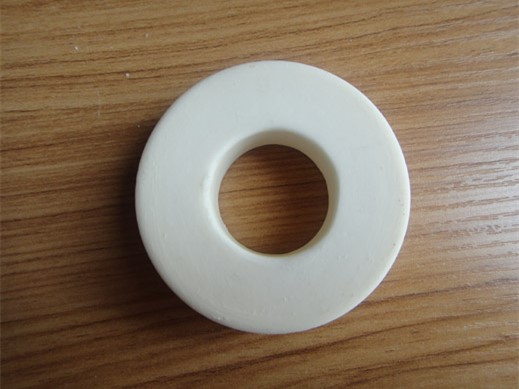
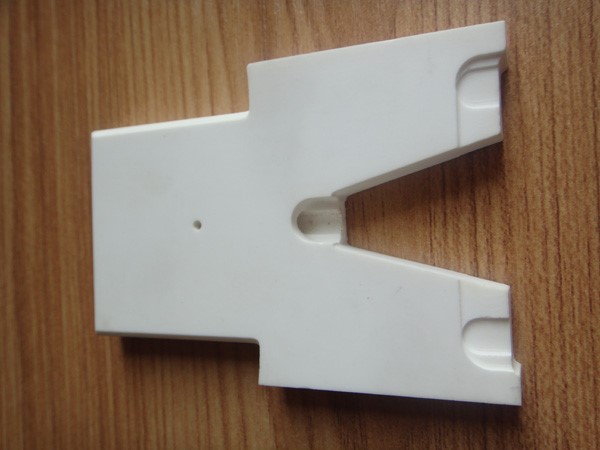
Ceramic component production involves material preparation, shaping, firing and finishing. The appropriate process depends on the component geometry, dimensional requirements and final application.
Selection and preparation of zirconia-based raw materials with magnesium stabilization.
Shaping the ceramic body according to the required component geometry.
Controlled firing to produce a consolidated ceramic component.
Grinding and finishing to achieve the required dimensions and surface condition.
Inspection of component dimensions and relevant material properties against project requirements.
Choosing an appropriate Mg-PSZ component requires consideration of material properties, geometry and operating conditions. Clear technical requirements help establish a suitable manufacturing solution.
Support with evaluating Mg-PSZ for high-temperature, thermal shock and mechanical applications.
Ceramic component requirements can be assessed using customer drawings, dimensions and application details.
Grinding and finishing operations help achieve the specified geometry and dimensional requirements.
Material and dimensional checks can be matched to the technical requirements agreed for each project.
Answers to common questions about Mg-PSZ material composition, properties and industrial applications.